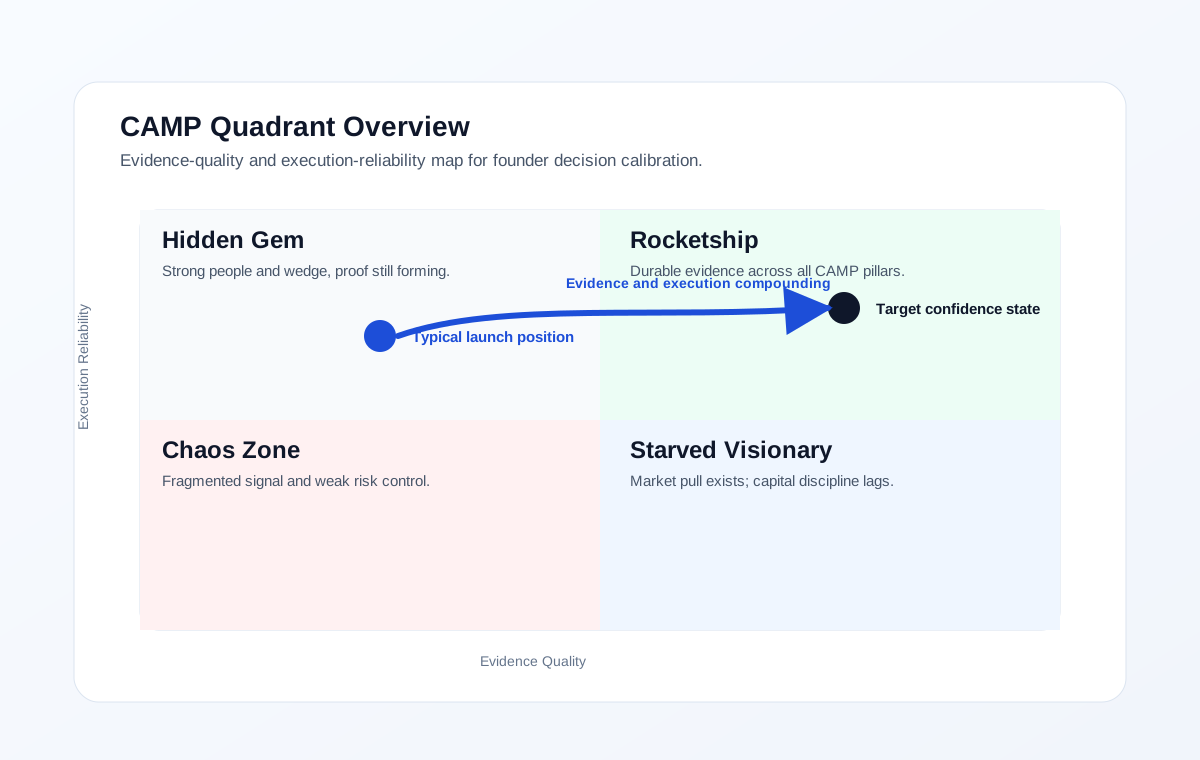
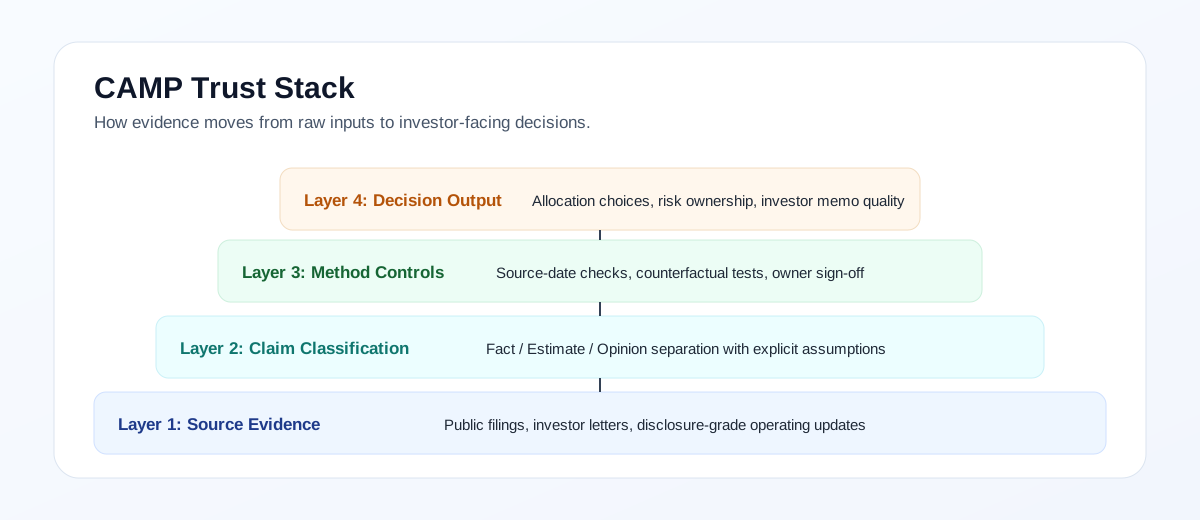
1) CAMP as a leadership decision system
CAMP is most useful when it governs decisions, not decks. Each pillar should translate into explicit quarterly commitments, owners, and evidence checkpoints. If scores do not change behavior, the framework is ornamental.
Use CAMP from pre-seed through Series A when financing readiness and execution reliability are both strategic priorities.
2) Trust architecture and evidence controls
| Control Layer | What We Enforce | Risk If Missing | Owner |
|---|---|---|---|
| Source validation | Cross-check numerical claims against primary disclosures and stated time windows. | Stale or mis-scoped conclusions. | Research reviewer |
| Claim labeling | Separate Fact, Estimate, and Opinion claims in every long-form section. | False precision and reader confusion. | Editorial lead |
| Assumption registry | Document key assumptions behind estimates and scenario calls. | Unseen fragility in recommendations. | Strategy owner |
| Decision traceability | Tie recommendations to explicit resource-allocation and risk-ownership decisions. | High-quality analysis with low implementation value. | Operating lead |
Method Guardrails
- Numerical claims require source and date context before publication.
- Absolutes are avoided unless directly provable from primary records.
- Every recommendation includes at least one downside scenario checkpoint.
3) Exhibit 1: the four underwriting questions
| Pillar | Underwriting Question | Required Evidence | Failure Signal |
|---|---|---|---|
| Capital | Can the team reach the next milestone without unstable financing risk? | Runway-to-threshold map with downside case. | Raise size changes without threshold logic. |
| Advantage | Can the company win and keep winning? | Wedge durability and competitive response evidence. | Feature expansion without moat reinforcement. |
| Market | Is demand repeatable and compounding? | Cohort conversion/retention and segment quality. | Top-line growth masking cohort weakness. |
| People | Can leadership execute and correct under stress? | Decision cadence, ownership clarity, and variance response. | Frequent reprioritization without accountability. |
Exhibit 1A. Stage weighting profile (directional baseline)
Pre-seed
Seed
Series A
Capital
Advantage
Market
People
4) Leadership operating cadence (45-minute monthly review)
Use the same meeting design every month so investor-facing confidence is traceable:
- 10 minutes: score movement by pillar and source-date verification.
- 10 minutes: risk concentration changes and owner accountability review.
- 15 minutes: resource reallocation decisions tied to milestone unlocks.
- 10 minutes: investor memo update and unresolved assumptions list.
5) Exhibit 2: action matrix when a pillar is weak
| If this pillar is weak | Do this first | Do not do this |
|---|---|---|
| Capital | Rebuild milestone-to-cash map and cut non-critical spend. | Raise ask size without new milestone logic. |
| Advantage | Narrow ICP and strengthen wedge before broad expansion. | Add adjacent features to look bigger. |
| Market | Prioritize retention and repeat conversion quality. | Hide cohort weakness with top-line volume. |
| People | Clarify ownership and decision cadence at leadership level. | Assume hiring alone will fix execution drift. |
6) Alternatives for the upcoming quarter
| Alternative | Allocation Logic | Upside | Primary Risk |
|---|---|---|---|
| A. Growth acceleration first | Shift resources toward top-line expansion and channel scale. | Faster narrative momentum. | Weakens Capital/People control if execution systems lag. |
| B. Balanced CAMP allocation | Resource split by stage-weighted confidence gaps. | Improves financing resilience and narrative coherence. | Requires disciplined governance and slower headline optics. |
| C. Capital preservation first | Prioritize runway extension and downside management. | Higher survival probability in risk-off environment. | Can delay market learning and competitive position gains. |
7) Common founder mistakes with CAMP
- Turning CAMP into a slide exercise instead of a monthly operating review.
- Changing score definitions each month so trends are not comparable.
- Using neutral language to hide deteriorating risk concentration.
- Reporting scores without declaring assumptions and evidence source dates.
- Ignoring score implications for headcount and budget decisions.
- Treating quarterly planning as separate from financing-readiness narrative.
8) Visual 90-day operating loop
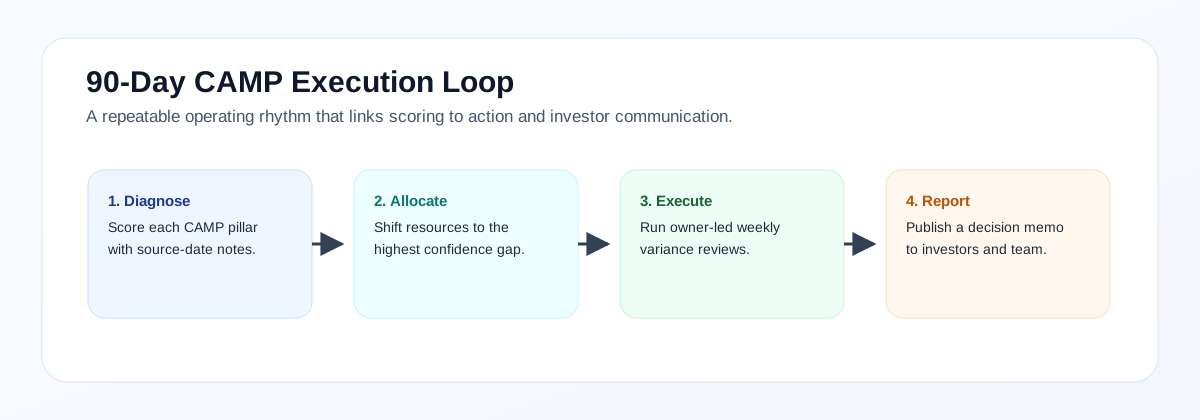
- Days 1-15: lock score methodology, assign owners, and validate evidence dates.
- Days 16-45: execute owner-led remediation on one high-impact confidence gap.
- Days 46-75: run external pressure tests and incorporate challenge questions.
- Days 76-90: publish round-calibrated memo with explicit tradeoffs and asks.
9) Founder 14-day adoption plan
- Days 1-2: define stage target and weighting assumptions.
- Days 3-5: baseline scores with source notes for each pillar.
- Days 6-8: run internal review and assign remediation owners.
- Days 9-11: update investor narrative in score-first format.
- Days 12-14: run one external advisor review and publish v1 update.
By the second cycle, investor follow-ups should become more decision-specific and less clarifying.